
Rabbit Behaviour Explained: Thumping, Digging, Biting and Hiding
Read behaviour in context, respond calmly and keep useful observation notes—without mistaking a posture or a quiet rabbit for proof of good health.
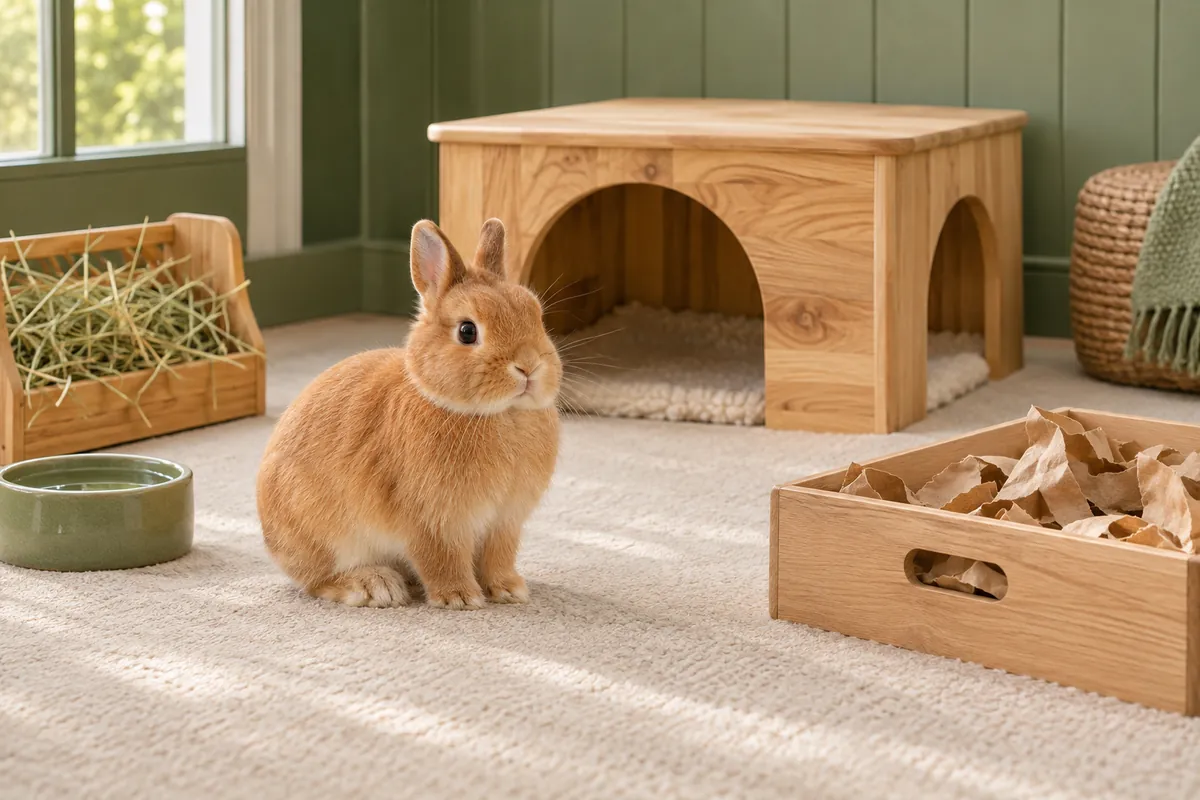
Read a sequence, not a single signal
The same movement can occur in different situations. Write down what happened just before, what you actually saw, and what happened afterwards. An ear position, a brief video or a single photograph cannot establish a diagnosis or tell the whole story.
Compare the rabbit with its own familiar routine, not an internet personality label. Breed, age, previous experience and surroundings matter. Ear positions are less straightforward in lop-eared rabbits, so avoid translating one ear shape into a fixed emotion. Use the tap-to-open examples below as questions to investigate, not a behaviour decoder.
Make observations useful without turning them into guesses
“Thumped twice when the door slammed, then went behind the hide” is an observation. “Jealous of the visitor” is an interpretation. Keep the observation even when you do not know the cause. Add whether eating, droppings and activity differed from the rabbit’s usual pattern, or write “not checked” rather than guessing.
If it is safe and does not disturb care, a short video may help a veterinarian understand a movement or sound. Never recreate a frightening event to obtain footage. Do not chase, restrain or provoke the rabbit to test an explanation.
Offer a better environment, not a punishment
Check whether the rabbit can move away, hide and reach its normal resources without obstruction. Appropriate digging, chewing and foraging opportunities are part of a rabbit-friendly environment. Change one non-urgent setup detail at a time so you can understand what happened afterwards.
For biting or lunging, stop reaching into the rabbit’s space and protect everyone from injury. Fear, restricted space, hormones or pain may be involved. A sudden change in a normally friendly rabbit deserves veterinary assessment. Discuss neutering and any persistent behaviour problem with an appropriate professional; do not treat neutering as a guaranteed instant fix.
Quiet does not automatically mean comfortable
Soft tooth movements can occur during relaxation, but sound alone is not enough to decide that a rabbit is comfortable. New or loud grinding, drooling, reduced appetite, low energy or an unusual posture should prompt veterinary advice. PDSA recommends getting tooth grinding checked, even when the rabbit otherwise seems well.
A resting rabbit and an unwell rabbit can both be still. Look for a change from normal rather than relying on a “happy flop” photograph. If a rabbit is collapsed, struggling to breathe or appears seriously unwell, contact a veterinarian urgently instead of waiting to see whether the behaviour repeats.
Use your records to ask a clearer question
A useful note has a date and time, a factual observation, relevant context, food and dropping observations, and the action taken. If advice was obtained, record who provided it and the next action they recommended. A care log supports a consultation; it does not replace one.
Fictional example: “8 November, 18:10. Two thumps after a door slammed; moved into hide. Hay intake and droppings not yet checked. Door closed softly; left retreat available. Next action: check the usual care observations and contact the clinic if anything has changed or remains concerning.” This demonstrates note structure, not permission to delay treatment.
Use the scratch note below, copy it, then open Rabbitry Manager and choose the relevant rabbit and existing notes or care-record tool. Paste or transcribe it where appropriate. Nothing from this public page is saved into your account automatically, and no private rabbit record is exposed.
Know when to stop troubleshooting at home
Do not wait to complete an observation diary when eating or droppings reduce markedly, breathing is difficult, the rabbit collapses or seems in severe pain. Seek urgent veterinary advice. For persistent behaviour concerns without an immediate emergency, start with a health assessment and ask about qualified behaviour support.
Do not offer human medicines, force handling or introduce an unfamiliar rabbit as a quick solution. Social bonding needs its own preparation; hiding, biting or thumping is not an instruction to put two rabbits together. Use the existing housing and introduction guides for background, with individual professional advice where needed.
Tap a behaviour to explore the context
No behaviour here proves that a rabbit is healthy or unwell. A sudden change or accompanying health concern matters more than matching a label.
Thumping
May occur with alarm, frustration or other situations. Check for a sudden noise, movement or change in routine. Keep a retreat available; do not punish the rabbit or replay a startling sound. Repeated or unusual thumping with other changes deserves professional advice.
Digging and chewing
These can be natural activities. Provide suitable opportunities and protect cables and unsafe materials. Note whether the activity changed after a layout or routine change. A digging box is enrichment, not a cure for pain, stress or an inadequate living space.
Biting or lunging
Avoid labelling the rabbit as mean. Stop the interaction and allow distance. Check for fear, blocked escape or a change from normal; consider pain with your veterinarian. Do not put your hand in the way to test whether the rabbit will bite again.
Hiding or freezing
A rabbit needs a retreat, but persistent new withdrawal should not be dismissed as shyness. Avoid pulling it out for reassurance. Check its usual care observations and seek veterinary advice if behaviour changed or there is any concern.
Ears, posture and attention
Look at the body and situation together, particularly for lop-eared rabbits. Ear positions alone do not measure mood. Notice whether the rabbit can choose to move away rather than assuming stillness means it enjoys being touched.
Binkies, grooming and relaxed resting
These may occur during comfortable activity. They are not a health certificate. Keep observing the overall routine and do not use an illustration or a past happy moment to dismiss a new concern.
A useful observation note
Fill this in without guessing. It stays on this page only and resets if you leave or reload. Copy or print it to keep a record. Do not enter another person’s private contact details.
This worksheet does not assess urgency. Contact a veterinarian directly if you are concerned; do not wait for an admin reply.
No automatic saving, upload or account changes.
Open Rabbitry Manager to choose your rabbit →. Paste or transcribe your note into the appropriate existing care record. Tool access follows your current account permissions.
Sources, scope and corrections
Prepared by RabbitTrust using the references below, checked November 8, 2026. This is general educational guidance, not veterinary review, diagnosis or a treatment plan. Illustrations, planning prompts and fictional examples were created for this guide. Source links do not imply endorsement.
- RSPCA — Natural behaviour and interpreting the whole rabbit
- RSPCA — Safe digging, foraging and other enrichment
- Scottish SPCA — Thumping and why context matters
- Rabbit Welfare Association & Fund — Fear, pain and aggression
- PDSA — Tooth grinding and when to contact a veterinarian
Our editorial standards · Report a correction. Include the guide URL and passage concerned; do not send urgent animal-health questions as editorial requests.
A useful next step
Understand what you observe before planning introductions.
- Bonding Rabbits Safely: Preparation, Supervision and a Progress Log →
- Rabbit Housing, Enrichment and Cleaning That Work Together →
Keep ongoing private rabbit records in your account.
Open Rabbitry Manager →Guides are free to read without an account. Tools require sign-in and may require the relevant access. Nothing entered in an article worksheet is transferred automatically.