
How to Litter Train Your Rabbit: Setup, Routine and Troubleshooting
Choose an accessible tray, work with your rabbit’s preferred toilet corner and troubleshoot accidents without punishment or cramped housing.
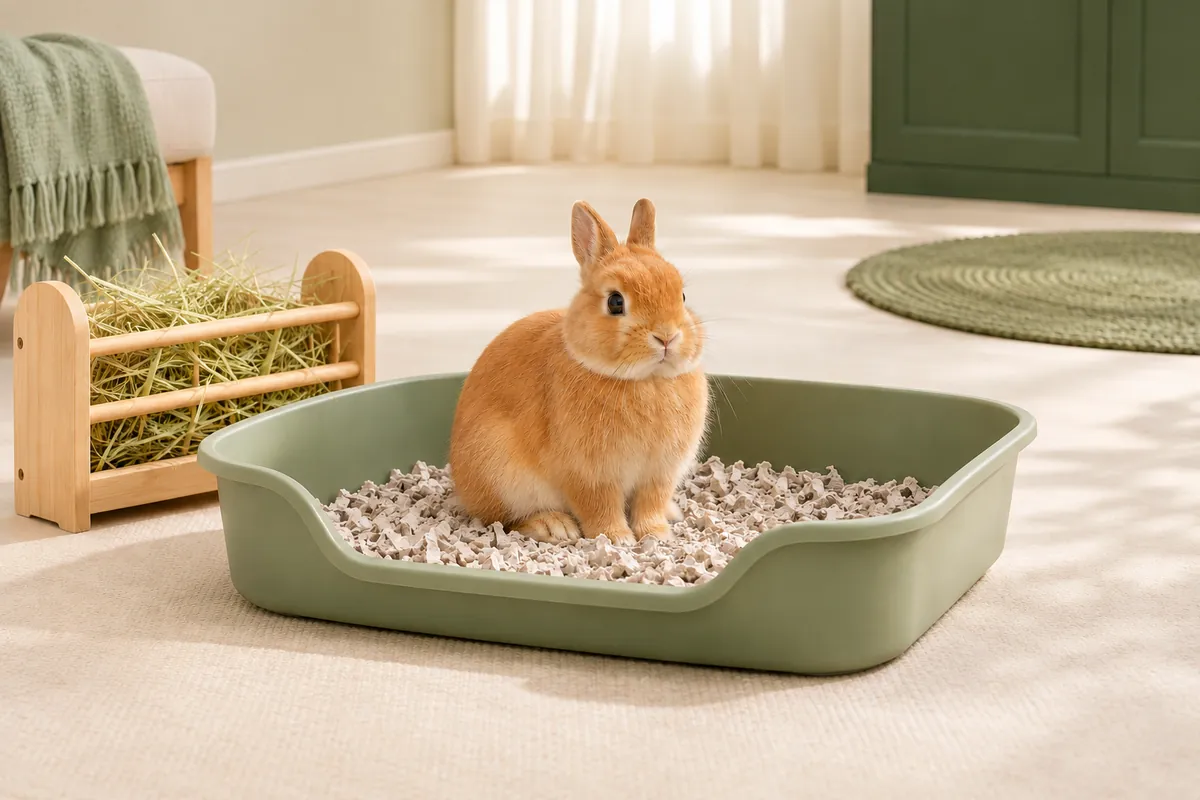
1. Start with a tray the rabbit can actually use
Choose a stable tray roomy enough to turn around in, with an entrance the rabbit can step over easily. Check accessibility for an older rabbit or one with mobility difficulties. A tiny corner tray may save floor space but still be awkward for the rabbit.
Use an unscented, rabbit-suitable, non-clumping paper-based litter. Avoid clumping or expanding cat litter. Keep fresh eating hay clean and within reach near the tray; replace anything soiled. Do not confuse absorbent toilet material with a substitute for fresh food.
2. Work with the chosen corner
Watch where the rabbit already toilets and place a tray there when practical. Add a few of its droppings or a little used litter to help identify the toilet. Provide more than one tray when there are several preferred areas; RSPCA guidance suggests one per rabbit plus an extra where possible.
Keep toilet and sleeping areas distinct. The rabbit should always be able to reach a tray. If you change the layout, check that a door, slippery mat or another rabbit is not blocking access.
3. Build a calm routine, not a punishment
Clean accidents promptly with a rabbit-safe product used according to its label, and leave the area dry before access. Do not shout, chase, rub the rabbit’s nose in an accident or withhold food or water. Reward calm use with gentle attention if the rabbit enjoys it; do not interrupt or lift it onto the tray.
Begin in the normal, adequately sized living area. When access expands into another rabbit-proofed area, add a tray there too. Do not reduce exercise space below welfare needs to make cleaning easier. Progress differs between rabbits and there is no guaranteed three-day timetable.
4. Keep a short experiment log
Use three columns: observation, one change, next review. For example: “Urine beside tray; check entrance height and stability; review tomorrow.” Change the tray position or entry—not the position, litter and whole routine at once—so the result is interpretable.
Fictional example: on Monday, Clover used the corner behind the hide. The owner placed a second accessible tray there and left the original in place. On Wednesday, the log showed which tray was used. This demonstrates a recording method, not a promise that every rabbit will respond in two days.
5. Understand marking and setbacks
Scattered droppings can be territorial marking rather than a failure to recognise the tray. Hormonal behaviour may also affect habits; discuss neutering, timing and suitability with a rabbit-experienced veterinarian. Do not assume training will solve fighting or an unsuitable pairing.
If an established routine changes suddenly, consider access, recent changes and possible illness. Straining, blood, a wet or sore rear, pain, reduced eating or markedly fewer droppings need veterinary advice. The troubleshooting cards below are for setup checks, not diagnosis.
Tap an issue to check the setup
These suggestions concern the environment. They do not diagnose a medical cause.
Urine lands beside the tray
Check the entrance height, tray size, stability and exact position. Try an accessible second tray at the preferred spot. A rabbit may be standing in the tray while its rear extends beyond the edge. Sudden changes or discomfort warrant veterinary advice.
The rabbit sleeps in the tray
Provide a comfortable separate resting place and keep eating hay clean. Check that the shelter is attractive and accessible; do not remove toilet access to force a choice.
Droppings appear around a new area
Look for territorial marking and additional toilet corners. Add a tray, maintain familiar routines and discuss hormonal behaviour with the clinic if relevant. Punishment will not explain the layout.
Training was going well, then changed suddenly
Check blocked access, a changed tray or household disruption, but do not assume these explain everything. Pain, straining, blood, a wet rear, reduced appetite or fewer droppings need prompt veterinary attention.
Try this observation note
When / what happened / one setup change / what to review next. Keep the observation separate from a guess about its cause.
Observation: _______________________________________________________________
One change: __________________________ Next review: __________________________
Turn a useful note into a routine
Reading, checking boxes and trying this worksheet are free without an account. For ongoing records, use your existing RabbitTrust account. Tools may require the relevant account access or entitlement.
No worksheet values or checklist ticks are copied into an account automatically.
Sources, scope and corrections
Prepared by RabbitTrust using the references below, checked November 7, 2026. This is general educational guidance, not veterinary review, diagnosis or a treatment plan. Diagrams, planning prompts and fictional examples were created for this guide. Source links do not imply endorsement.
- PDSA — Litter-training steps and suitable trays
- RSPCA — Indoor toilet areas and training
- PDSA — Indoor living and house-training considerations
Our editorial standards · Report a correction. Include the guide URL and passage concerned; do not send urgent animal-health questions as editorial requests.